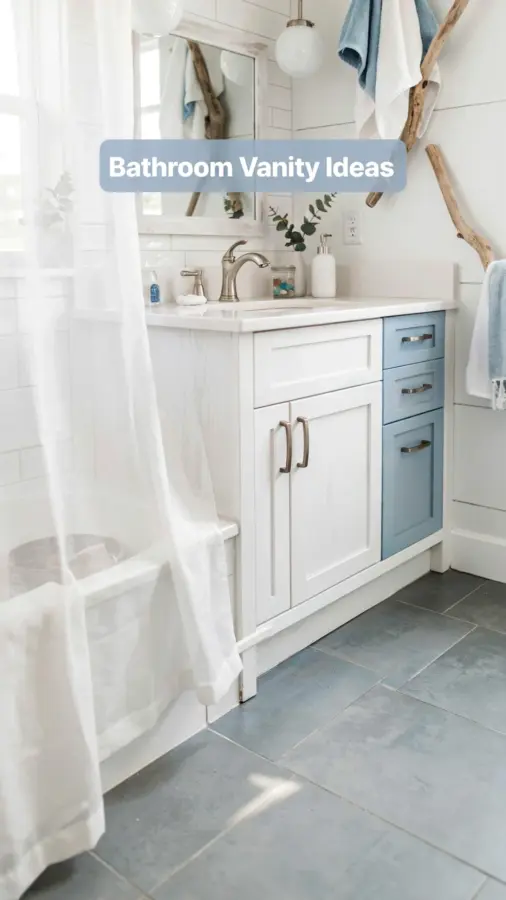
If you have ever stared at a cramped bathroom and wished you could just make the clutter disappear, you are not alone. I have been there, and that is exactly why the hidden bathroom vanity idea caught my attention. Instead of a bulky cabinet that eats up visual space, you install a camouflaged wood panel cabinet that blends right into the wall. It gives you discreet storage without turning your tiny washroom into a cluttered mess. I have rounded up several distinct approaches to this clever design, each with its own personality and practical payoff. Whether you want a weekend DIY or a custom carpenter project, here are my favorite ways to hide a vanity in plain sight.
Flush Mount Illusion: The Seamless Wood Panel Vanity
This is the purest form of camouflage. You take a piece of plywood or solid wood that matches your wall paneling exactly, mount it flush with the surrounding surface, and fit a slim cabinet behind it. The front looks like a continuous wall, but it actually swings open or slides sideways to reveal shelves. I have seen this done in bathrooms where the wall is already covered in shiplap or beadboard, and the result is almost magical. The cabinet depth is usually only four to six inches, perfect for toothbrushes, spare toilet paper, and small toiletries. Keep the hardware minimal or use a push-to-open mechanism so nothing gives the secret away.
Corner Nook Camouflage: Making Dead Space Disappear
Corners in small bathrooms are often wasted, but a hidden vanity can turn that awkward triangle into a storage powerhouse. I love the idea of building a custom wood panel that matches the adjacent wall, then hinging it from the corner like a door. Inside you can install narrow shelves that follow the angle. Because the panel hides the opening, it looks like the wall just continues around the corner. This works especially well behind a toilet or beside a shower enclosure. The key is to use the same paint color or wood stain on all nearby trim so no seam gives away the trick.
Magnetic and Push-to-Open Hardware: The Unseen Pull
Nothing ruins a hidden cabinet faster than a visible handle or knob. That is where modern hardware comes to the rescue. I have installed push-to-open latches on several projects, and they are surprisingly reliable. A gentle press on the wood panel releases the magnet, and the door pops open just enough to grab with your fingertips. Another option is a magnetic catch combined with a recessed finger pull routed into the edge, which stays invisible from the front. You can also use a touch-latch system that works with a simple electric strike, but for a DIY approach mechanical push latches are cheap and easy to adjust. Aim for a soft-close hinge so the panel does not slam shut and betray its own location.
Matching Grain and Stain: The Art of Invisible Seams
Here is where the craftsmanship really matters. If you use wood paneling, the grain direction and stain color on your hidden door must match the surrounding wall exactly, or the whole illusion falls apart. I have learned this the hard way. The best trick is to take a leftover piece of your wall material and cut the door from it, using the same saw blade direction so the grain lines up. If you paint the unit instead of staining it, use the exact same can of paint and apply it at the same time to avoid slight color variation. A small gap of one-sixteenth of an inch around the door is normal, but you can hide it with a matching trim or by recessing the door slightly. Do not rely on caulk; it can crack and become obvious over time.
Behind the Mirror: Dual Purpose Camouflaged Storage
This is not a wood panel per se, but it fits the hidden vanity idea perfectly. You can mount a full length mirror on a cabinet door that swings open, revealing shelves behind it. The mirror frame should match the wall color or be frameless so it looks like an ordinary mirror. Inside, you store everything from hairdryers to medicine. I prefer a mirror with a beveled edge because it reflects light and makes the room feel bigger, while the cabinet behind it stays completely out of sight. If you are worried about steam, use a sealed wood or a marine grade plywood with a high quality waterproof paint. Pair it with a magnetic latch and you have a clever space saving trick.
- Pros: Doubles as a grooming tool, easy to install over existing studs, works in very tight spaces.
- Cons: Mirrors can fog up, limited depth (usually 3 to 5 inches), requires careful alignment so the mirror does not hit the sink.
- Best for: Above a pedestal sink or next to a vanity where wall space is already taken by a mirror.
Slim Profile Medicine Cabinet Style Wood Panel
Medicine cabinets are bulky and often ugly, but you can turn one into a hidden beauty. Take a standard recessed medicine cabinet and frame it with a wood panel door that matches your wall. When closed, it is just another section of beadboard or flat panel. When open, you have deep shelves for lotions and bottles. I have done this
#hiddenvanity #bathroomstorage #woodpaneldesign #smallbathroomideas #camouflagedfurniture
Leave a Comment